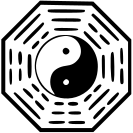
Bagua with Taiji
The Bagua diagram arranges eight trigrams around Taiji, the symbol of complementary yin and yang forces.
View meaning Bagua is the system of eight trigrams used in the I Ching. Each trigram consists of three solid yang or broken yin lines and represents a natural image, direction of movement, and pattern of change. The category also includes the complete Bagua diagram with Taiji at its center.
Choose a card to view its meaning and full description.
The Bagua diagram arranges eight trigrams around Taiji, the symbol of complementary yin and yang forces.
View meaning

A broken bottom line beneath two solid lines represents Wind or Wood: gentle, gradual penetration.
View meaning
One solid line between two broken lines represents Water, depth, and movement through difficulty.
View meaning
A solid top line above two broken lines represents Mountain, stillness, and a firm boundary.
View meaning
Three broken yin lines represent Earth, receptivity, and the capacity to nourish forms.
View meaning
A solid bottom line beneath two broken lines represents Thunder: the first impulse and awakening of movement.
View meaning

One broken line between two solid lines represents Fire, light, clarity, and the quality of attachment.
View meaningNo matching symbols in this category.